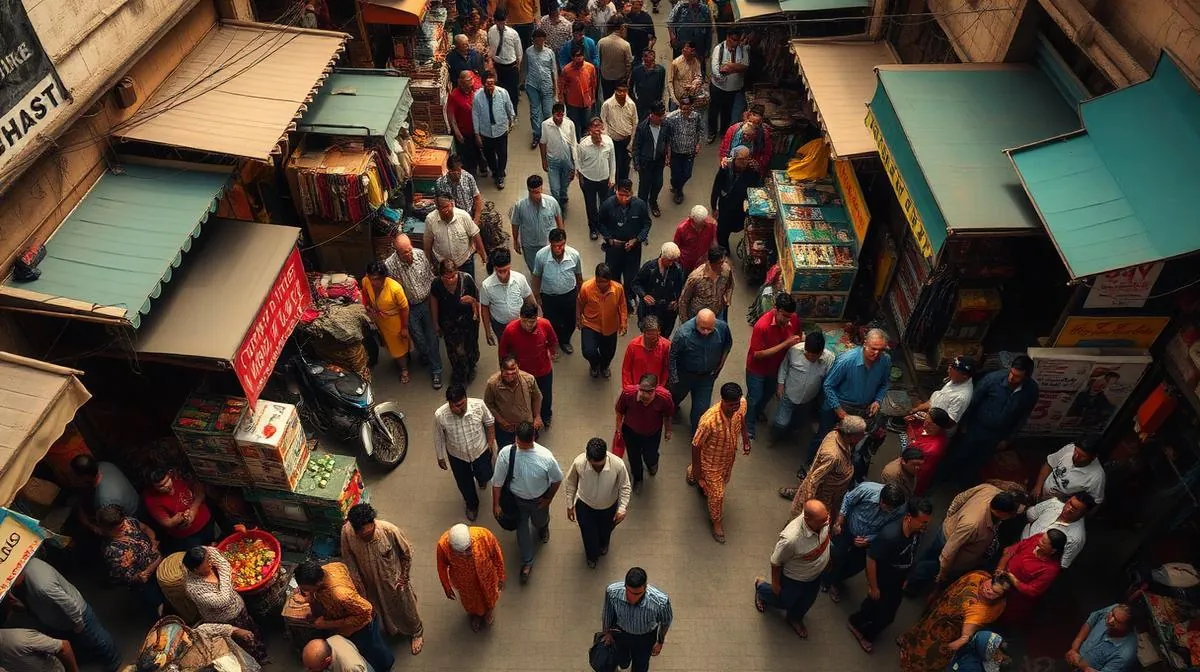
Stand on a rush-hour train in Tokyo, and you'll notice something remarkable: dozens of people pressed together in near-silence, each maintaining a serene composure despite physical proximity that would cause visible distress on, say, a half-empty bus in rural England.
The invisible bubble of personal space — what anthropologist Edward T. Hall called proxemics — is one of the most powerful and least discussed forces in human interaction.
Hall's Four Zones
In the 1960s, Hall identified four distinct spatial zones that govern how Americans (his primary subjects) interact:
- Intimate distance (0–45 cm): Reserved for close relationships. Entering this zone with a stranger triggers a stress response. - Personal distance (45–120 cm): The space for friends and casual conversation. - Social distance (1.2–3.6 m): Used for formal interactions and acquaintances. - Public distance (3.6 m+): The comfort zone for strangers and public speaking.
But these measurements aren't universal. They're cultural products, shaped by history, climate, population density, and social norms.
Cultural Variations
Research by Agni Stefanidis and colleagues, published in the *Journal of Cross-Cultural Psychology*, measured preferred interpersonal distances across 42 countries. The results revealed fascinating patterns:
Closer-contact cultures include many South American, Middle Eastern, and Southern European countries. In Argentina and Saudi Arabia, standing at "social distance" can feel cold or dismissive. Warmth is expressed through proximity.
Greater-distance cultures include Northern Europe, East Asia, and parts of North America. In Finland or Japan, respecting someone's space is itself a form of politeness.
Why This Matters
Misreading spatial norms is one of the most common sources of cross-cultural discomfort. A Brazilian colleague who stands close during conversation isn't being aggressive — they're being friendly. A Swedish colleague who steps back isn't being cold — they're being respectful.
When we understand that personal space is learned, not instinctive, we stop moralising about other people's spatial behaviour. We start seeing it as what it is: a window into how different societies have solved the beautiful, complex problem of living together.
The Post-Pandemic Shift
COVID-19 added a new chapter to the story of personal space. Across cultures, interpersonal distances increased, and many haven't fully returned to pre-pandemic norms. We're living through a global recalibration of proximity — a rare moment when billions of people simultaneously rewrote their spatial habits.
The space between us is never empty. It's full of culture, history, and meaning.