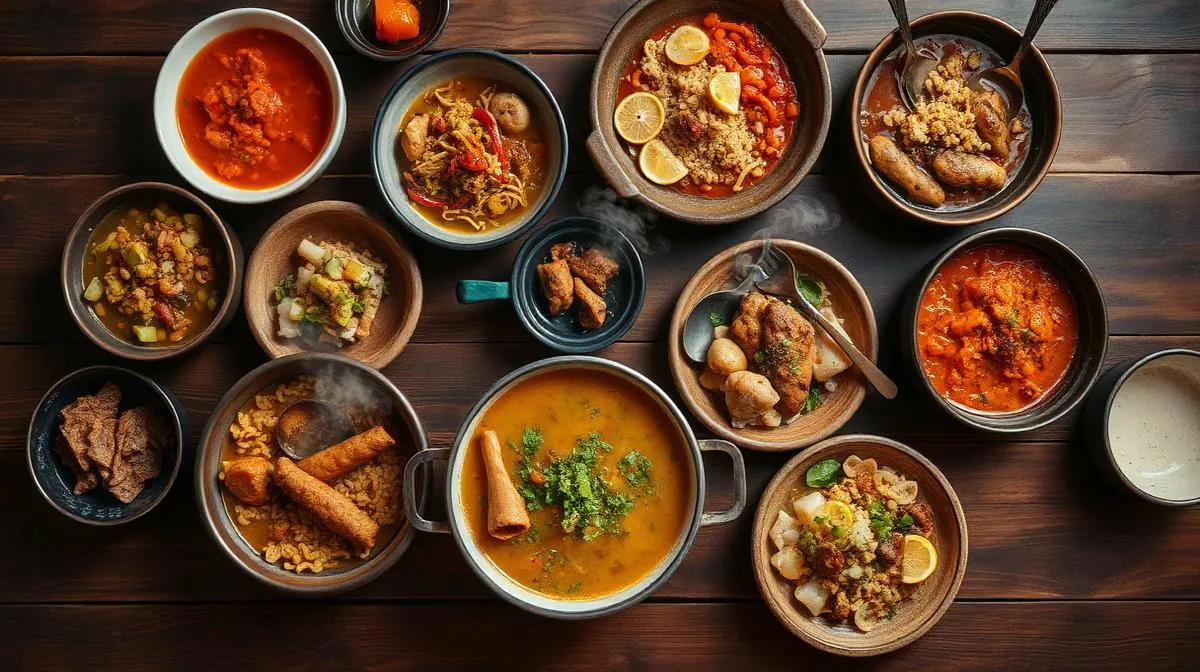
In a small kitchen in Queens, New York, a grandmother makes a soup she learned from her mother, who learned it from hers. The recipe has crossed an ocean and survived two generations of adaptation. The vegetables have changed — what grew in Puebla doesn't grow in New York — but the technique, the rhythm of preparation, the smell, remains.
This is food as identity. Not as nutrition, not as trend, but as a living archive of who we are and where we came from.
Food as Cultural Memory
Anthropologist Claude Lévi-Strauss argued that cooking is one of the primary ways humans transform nature into culture. Every cuisine is a system of rules, preferences, and taboos that encodes a society's values.
Consider rice. In Japan, the word for cooked rice (*gohan*) is the same as the word for "meal." In parts of West Africa, a day without rice is barely considered a day of eating. In Italy, rice becomes risotto — stirred slowly, treated with the patience that Italian food culture celebrates.
The grain is the same. What cultures do with it reveals everything.
The Politics of the Plate
Food is never apolitical. The spice trade shaped centuries of colonialism. Sugar plantations drove the Atlantic slave trade. Today, debates about food appropriation versus appreciation reflect deeper questions about power, ownership, and respect.
When a dish travels from one culture to another, something is always gained and something is always lost. The question isn't whether food should cross borders — it always has. The question is whether the crossing carries acknowledgment or erasure.
Comfort Food and Emotional Regulation
Psychologist Jordan Troisi's research found that comfort food works not because of its nutritional content but because of its social associations. The foods that comfort us are almost always foods we associate with relationships — family meals, childhood treats, shared celebrations.
Eating your grandmother's soup isn't just feeding your body. It's activating a network of social memories that make you feel connected, safe, and seen. The taste is a shortcut to belonging.
Food as Resistance
Throughout history, marginalised communities have used food as a form of cultural preservation. During slavery in the Americas, enslaved people transformed discarded ingredients into dishes of remarkable creativity and flavour — the foundations of what we now call soul food, Creole cuisine, and much of Caribbean cooking.
In the Soviet era, families preserved traditional recipes as quiet acts of cultural resistance. In diaspora communities worldwide, cooking ancestral dishes is an act of remembrance and defiance: *we are still here, and we remember who we are.*
The Universal Table
Despite all the differences, every human culture has developed ways of gathering around food. The details differ enormously — what we eat, when, with whom, and how — but the impulse is universal: food is better shared, and sharing food creates bonds that words alone cannot.
Next time you sit down to eat, consider what's on your plate beyond the ingredients. There's history there, and identity, and probably a story worth knowing.